
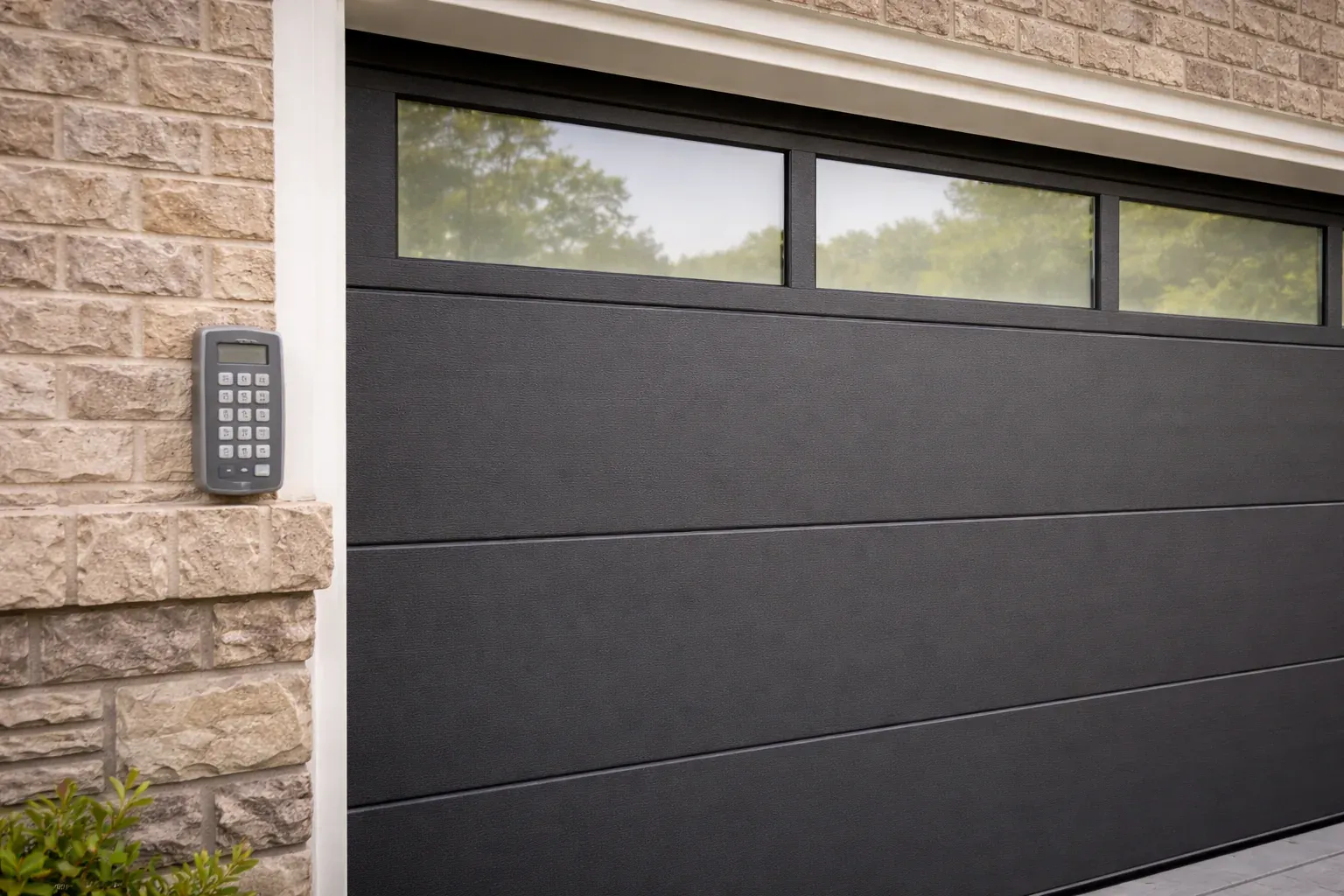
When choosing a garage door opener, one of the biggest decisions is chain drive vs. belt drive. Both can be reliable. The best pick depends on your home layout (attached vs. detached), your tolerance for noise, and how smooth you want the door to feel day-to-day.
Quick takeaways
- If noise matters (bedroom/office near the garage), belt drive is usually the winner.
- If you want a simple, proven workhorse and noise isn’t a big deal, chain drive is often a great fit.
- If the door is heavy or binds, the best “upgrade” may be fixing balance/hardware—not swapping opener types.
How chain and belt drives work (simple version)
Both opener types use a motor to pull a trolley along a rail. The only difference is what connects the motor to the trolley:
- Chain drive: a metal chain moves the trolley.
- Belt drive: a reinforced belt moves the trolley.
That drive mechanism affects noise, vibration, and maintenance feel.
Chain drive openers
Why homeowners choose chain drive
- Proven design: straightforward and common.
- Strong pull: often paired with setups that handle heavier doors well.
- Serviceability: parts and repairs are generally familiar to technicians.
Trade-offs to know
- More vibration: metal-on-metal movement can transmit vibration into the ceiling structure.
- More “mechanical” sound: especially noticeable in attached garages.
- Maintenance mindset: chain systems typically benefit from periodic checks to keep things smooth and quiet.
Belt drive openers
Why homeowners choose belt drive
- Quieter operation: reduced vibration is the main selling point.
- Smoother feel: belts tend to feel more “refined,” especially on newer doors.
- Cleaner maintenance: often less fuss and less “rattle” over time.
Trade-offs to know
- Different wear pattern: belts can wear over time and should be inspected periodically.
- Not a fix for a bad door: if the door is out of balance, a belt drive opener can still struggle.
The most important check: is your door balanced?
If you’re replacing an opener because it’s struggling, do this first:
- Disconnect the opener (emergency release).
- Lift the door manually a short distance.
If the door feels very heavy, drops quickly, or doesn’t move smoothly, start with springs/balance. That protects any opener you install.
Which one is right for your home?
Belt drive is usually a great fit if…
- Your garage is attached and you care about noise
- You have a bedroom, nursery, or office near/above the garage
- You want the “smoothest” daily experience
Chain drive is usually a great fit if…
- Your garage is detached or noise isn’t a concern
- You want a proven, straightforward opener setup
- You’re comfortable with periodic maintenance checks
Smart features: drive type vs. model features
Smart features (like Wi‑Fi control, keypads, and remotes) depend on the specific opener model, not whether it’s chain or belt drive. If you want a smart-enabled setup, we can help you choose an opener that matches your goals and your door.
A quick “before you buy” checklist
- Confirm the door is balanced and the track is in good shape.
- Decide how important quiet operation is in your home layout.
- Make sure your safety sensors and auto-reverse features are working correctly.
- If you want smart features, confirm keypad/remote compatibility and ask about setup steps.
Next step
If you want help choosing (or your opener is failing), we can inspect the door, check balance, and recommend the most sensible opener option. Start here: Contact.
Special Considerations for Tennessee
Tennessee’s climate (humid summers, occasional freezing winters, moderate temperature swings) works well for both drive types:
- Belt drives perform excellently in Tennessee’s climate. Extreme cold that affects belt flexibility is rare.
- Chain drives handle humidity well with proper lubrication to prevent rust.
Recommendation: In Tennessee, drive choice should be based primarily on noise preference and garage location relative to living spaces, not climate.
Installation and DIY
Both chain and belt drive openers can be installed by homeowners with mechanical aptitude and basic tools, though professional installation is recommended to ensure proper alignment, force adjustment, and safety feature calibration.
DIY difficulty: Similar for both types. Belt drives are slightly easier due to no lubrication during assembly.
Top Brands and Models
Chain Drive
- LiftMaster 8500W: Wall-mount, space-saving design, Wi-Fi
- Chamberlain B970: Battery backup, myQ smart control, strong motor
- Genie ChainMax 1000: Budget-friendly, reliable, 1HP motor
Belt Drive
- LiftMaster 8365W-267: Ultra-quiet, Wi-Fi, timer-to-close, battery backup
- Chamberlain B4545T: Belt drive, battery backup, myQ smart app
- Genie SilentMax 1200: Very quiet, strong motor, easy setup
Conclusion
For most homeowners with attached garages and living spaces near the garage, a belt drive opener is worth the additional cost for the significant noise reduction and smooth operation. If your garage is detached or separated from bedrooms, a chain drive offers excellent reliability at a lower price point.
Both types are durable, reliable, and compatible with modern smart features. Your decision should prioritize how noise and vibration will impact your household, your budget, and your maintenance preferences. For professional opener installation or to compare models, contact NK Garage Doors serving Cleveland, Chattanooga, and surrounding Tennessee communities.